Pages

Showing posts with label Climate Chaos. Show all posts

Thursday, 31 October 2019

The Zero Waste Climate Solution Movie


Video questions:

What has human activity done to our planet? Has created a lot of green house gas

What is Zero Waste?
Definition: One of the quickest and cheapest ways a community can immediately reduce climate impact 

What stuff has a carbon footprint?

What are 2 easy things to help our planet?
  1.  Trees  
  2.   Air
What do we need to recycle?
  1. plastic
  2. cardboard
What does recycling do to our planet?

Keep it are planet clean.

How much of our rubbish is made up of food scraps? 
40 percent 

What does methane gas do to our planet?
 Make carbon dioxide and toxic gas.


What does soil do to carbon dioxide in the atmosphere?
 soil traps carbon dioxide and the carbon dioxide grow is plants.
What dose using zero waste practices do to our planet?
 make it so there is know rubbish and know rappers on the ground.


Thank you looking at my blog.


Solar Energy

                                          Solar Energy


In pairs rate the livability of coal vs solar energy.

Comparing Coal energy with Solar energy ( Rate; 1 = poor to 10 = great)

Factor
Solar
Coal
Livability
10
3
Sustainability
10
2
Accessibility
10
5
Cost
9
7
Your choice...
Yes
No

 Water ,wind and sun are renewable energy's 
Solar is easy to get  and you can use it very easy to get.


Thank you for looking blog


Thursday, 24 October 2019

My Investigation on climate change


My Investigation on climate change


    ACIDIFICATION


    What is happening to the oceans? 
    Carbon is going to the oceans 

    What does this do to shellfish?

    Acidification is when is when the action or process of making.
    shells are loosening there calcium

    What are trees used for? Tables Books Houses

    HOW DOES DEFORESTATION AFFECT THE CLIMATE?

    We lose are trees which makes carbon dioxide


    If all the ice melted what would happen?
    the word will get to cold so we will not be able to live on earth.
    The place will be fold

    HOW DOES ICE CAP MELT AFFECT CLIMATE CHANGE?

    It gets to cold


    Thursday, 17 October 2019

    Wind Power

    Hurumanu - Wind Power


    Measuring weather.

    Definitions:


    1.  Anemometer:
    2. Beaufort wind scale:

    Anemometer

    MATERIALS

    1. 4 dishes
    2. 2 sticks
    3. sellotape 
    4.   pin
    5.   pencil
    6.   
    7.   

    STEPS

    1.   Get to sicks and but them to giver with tape.
    2.   Put 2 dishes on each side of the stick with one facing one and facing the other put them to giver with tape.
    3.   Pin it to the ruber on the pencil.
    4.   Them go out side with your Anemometer.
    Groups size: 5 
    Roles:
    • Timekeeper
    • Counter
    • Recorder
    • Anemometer Manager
    • Wind Manager
    1. Mount the anemometer in a place that has full access to the wind from all directions.
    2. When the time keeper says "Go", the counter in each group will count how many times the marked cup passes them in one minute and write it down.
    3. Repeat the above step four (4) times and record the number of spins on the chart.

    FINDINGS

    • Record how many times it spins and record it in the table below.
    • You will need to time them and count the number of spins.


    Place name on school grounds                                    Number of Spins in 15 seconds
    1.Middle Of Field 11
    2.Front of tennis gate 0
    3.Old j block0
    4.Hill1

    CONCLUSION:

    The field was the wind easy part because it is the most open part of the school it spins 11 times .
    The tennis gate did not spin.
     Old J block did not spin .
    The  hill spins one times 


    Wind


    Beaufort
    Force
    Wind Speed
    (KPH)
    Spins
    Indicators
    Terms Used in NWS Forecasts
    0
    0-2
    0
    Calm; smoke rises vertically.
    Calm
    1
    2-5
    10
    Shown by direction of wind smoke drift, but not by wind vanes.
    Light
    2
    6-12
    40
    Wind felt on face, leaves rustle; ordinary vanes moved by wind.
    Light
    3
    13-20
    80 
    Leaves and small twigs in constant motion; wind extends light flag.
    Gentle
    4
    21-29
    130
    Raises dust and loose paper; small branches are moved.
    Moderate
    5
    30-39
    190
    Small trees in leaf begin to sway; crested wavelets form on inland waters.
    Fresh
    6
    40-50
    250
    Large branches in motion; whistling heard in telephone wires; umbrellas used with difficulty.
    Strong
    7
    51-61
    320
    Whole trees in motion; inconvenience felt walking against the wind.
    Strong
    8
    62-74
    390
    Breaks twigs off trees; generally impedes progress.
    Gale
    9
    75-87
    470
    Slight structural damage.
    Gale
    10
    88-101
    550
    Seldom experienced inland; trees uprooted; considerable structural damage occurs.
    Whole gale
    11
    102-116
    640
    Very rarely experienced inland; accompanied by widespread damage.
    Whole gale
    12
    117 or more
    730+
    Very rarely experienced; accompanied by widespread damage.


    Spins per minute
    Wind speed ( kph)
    Beaufort Scale
    Field
    442-53
    Old J Block site
    00-10
    Grass hill
    00-10
    Tennis Court Gate
    40-20


    Monday, 23 September 2019

    New science Lab

    Aim : To learn how to behave in a science lab

    1. Pay attention 
    2. Act responsibly around dangerous objects
    3. Do not run
    4. put your bag under your desk
    5. No food in the lab 
    6. Do not sniff or taste substances

    • Test tube tongs - These are used to hold a hot test tube after an experiment.
    • Glass Stirring rod - A 20cm glass rod used to stir and mix any liquids together.

    • Conical Flask - used for experiments with liquid up to 150 ml. The flask has a rubber bung for the top and the glass is heat proof.


    • Funnel
    • Glass Stirring rod - A 20cm glass rod used to stir and mix any liquids together.
    • Measuring Cylinder - this is used to measure liquids for experiments. The liquids will be poured into a beaker or test tube once measured out.


    Friday, 20 September 2019

    The Greenhouse Effect

     Climate Change and Greenhouse gases


    AIM: TO LOOK AT CLIMATE CHANGE AND THE GREENHOUSE EFFECT.


      THE GREENHOUSE GASES EXPLAINED.


      The Greenhouse Effect experiment

      Materials

      1. 1 plastic bottle
      2. 1 Teaspoon Baking Soda and Citric Acid
      3. 1 heat lamp
      4. 1 Thermometer
      5. 100 ml water
      6. 1 rubber bung

      Steps

      1. collect 2 bottles 2 lamps and 2 thermometers from the teacher.
      2. Set up the bottles and lamps beside a power points on a flat surface.
      3. Pour 100 ml water and baking soda mixture into one of the bottles add just water to the second bottle .
      4. Start to record your findings taken from both Thermometer these must be every 5 minutes.


      Findings:The Greenhouse Effect Data 


      Minutes
      Bottle 1: Water 
      Bottle 2: CO2 Gas
      018 degrees18 degrees
      524 degrees28 degrees
      1032 degrees37 degrees
      1539 degrees35 degrees


      Conclusion:
      The temperature of the Co2 bottle rose higher than the normal bottle.

      Thank you for looking at my blog 

      Solar Energy

                                                      Solar Energy
          

      Aim: To learn about how solar energy is used

      Hypothesis: I think that black will get the most heat.
      Out of black white silver.


      Aim: To find out which colour attracts the suns heat.

      Materials:

      1.  2 Styrofoam cups
      2. 1 clear cups
      3.  black paper
      4.  white paper
      5.  tinfoil
      6. heat lamp
      7. thermometer

      Steps

      1.  Get you stuff
      2. put black paper white paper tinfoil on your cups 
      3. put it in front the heat lamp
      4.  every 15 minutes check the reading


      Time 
      Cup 1
      White
      Cup 2
      Black
      Cup 3
      Tinfoil
      0
      16  1616
      15
      20 2320
      30
      2122 1/220
      45
      22232


      Conclusion


      The water cycle


      The water cycle 

      Hi, today I will be talking to you about the water cycle.

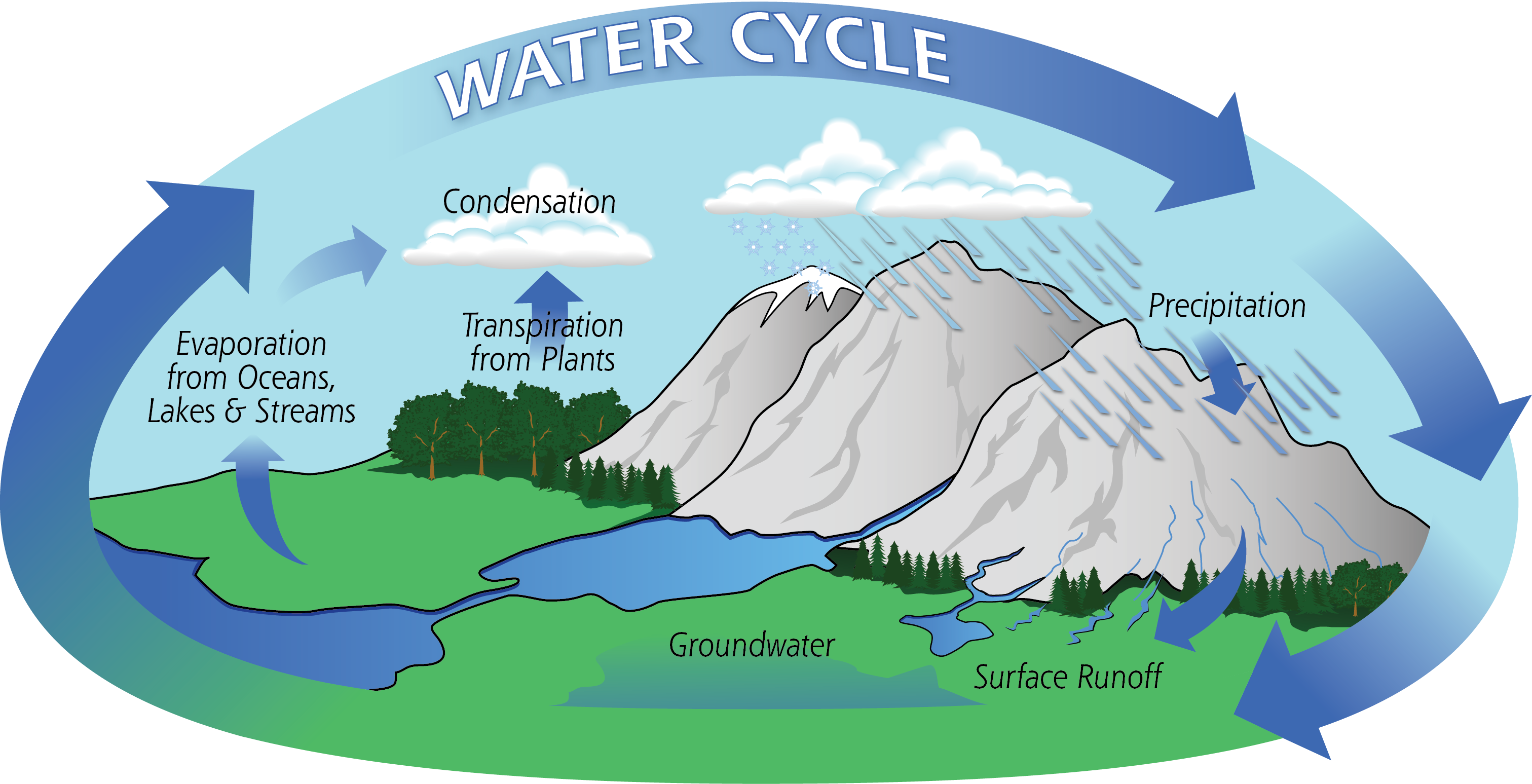
       This is the parts of the water cycle 

      Climate change, Evaporation ,Water vapour
      ,Condensation,Transpiration,Precipitation ,Acid rain ,Carbon dioxide


      Related image


      Scientific words:

      • Evaporation. When water is heated by radiant energy it turns into water vapor.
      • Transpiration. Evaporation from plants.
      • Condensation. When water vapor cools, molecules join together and form clouds.
      • Precipitation. When clouds get heavy the waters falls as rain, sleet, hail, or snow.
      • Acidification: the action or process of making or becoming acidic.

      THE WATER CYCLE SONG

      Image result for the water cycle


      THE WATER CYCLE EXPERIMENT

      Bag 1: Normal Water cycle
      Bag 2: Water cycle with CO2 added: like Oceans in climate change
      Bag 3: Water cycle with ice added: like Antarctica in climate change


      Title: The water cycle experiment 
      Purpose:
       To learn about how the water cycle works and And affects the world.

      Materials:
      Zip lock bag 1 A4
      Permanent Marker 
      Food coloring to drops 
      Water 
      Double-sided tape 20 centimetres 

      Steps:
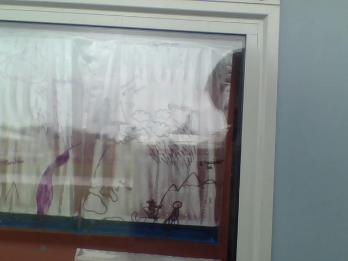
      1. Draw the water cycle on your bag
      2. Put the water in your bag
      3. Then put the food colouring in the 
      4. Zip up your bag  
      5. Put the tape on the bag 
      6. Then put the bag on the window Then look at the pollution in the water cycle 


      Findings:


      The Water Cycle
      Acid Water Cycle
      Does it cycle?
      21
      Amount of Water
      22
      Acidity
      11

      Key: Water and acidity amount: 0 = none 
      1 = small 
      2 = large 

      Other comments:

      The water cycle had a lot of condensation and did the cycle good 
      Acid water cycle  the paper had not changed.


      Conclusion:

      if you make this experiment you will get to learn about the water cycle 

      Thank you for looking at my blog