Pages

Tuesday, 29 October 2019

Inferring

                                                              Inferring
Welcome back to my blog to day I will be talking to about Inferring.


 Inferring is when you collect 2 pieces of info and put them together.


Inferring
  1. Kenzie seen the photos from last year.
  2. Kenzie watches out the bus window until her mum’s out of sight.
  3. Maddie says, taking a top bunk.
  4. She squashes her teddy bear under her pillow so the girls can’t see it. 
  5. Back in the dining hall, everyone’s talking about what time they went to sleep and how many mosquito bites they have.
Literal 
  1. Kenzie saw the photos.
  2. Kenzie looked out the window.
  3. maddie is sleeping on the top bunk.
  4. She hides her teddy bear.
  5. Everyone’s talking about what time they went to sleep.

Thank you for looking at my blog.

Thursday, 24 October 2019

My Investigation on climate change


My Investigation on climate change


    ACIDIFICATION


    What is happening to the oceans? 
    Carbon is going to the oceans 

    What does this do to shellfish?

    Acidification is when is when the action or process of making.
    shells are loosening there calcium

    What are trees used for? Tables Books Houses

    HOW DOES DEFORESTATION AFFECT THE CLIMATE?

    We lose are trees which makes carbon dioxide


    If all the ice melted what would happen?
    the word will get to cold so we will not be able to live on earth.
    The place will be fold

    HOW DOES ICE CAP MELT AFFECT CLIMATE CHANGE?

    It gets to cold


    Thursday, 17 October 2019

    Wind Power

    Hurumanu - Wind Power


    Measuring weather.

    Definitions:


    1.  Anemometer:
    2. Beaufort wind scale:

    Anemometer

    MATERIALS

    1. 4 dishes
    2. 2 sticks
    3. sellotape 
    4.   pin
    5.   pencil
    6.   
    7.   

    STEPS

    1.   Get to sicks and but them to giver with tape.
    2.   Put 2 dishes on each side of the stick with one facing one and facing the other put them to giver with tape.
    3.   Pin it to the ruber on the pencil.
    4.   Them go out side with your Anemometer.
    Groups size: 5 
    Roles:
    • Timekeeper
    • Counter
    • Recorder
    • Anemometer Manager
    • Wind Manager
    1. Mount the anemometer in a place that has full access to the wind from all directions.
    2. When the time keeper says "Go", the counter in each group will count how many times the marked cup passes them in one minute and write it down.
    3. Repeat the above step four (4) times and record the number of spins on the chart.

    FINDINGS

    • Record how many times it spins and record it in the table below.
    • You will need to time them and count the number of spins.


    Place name on school grounds                                    Number of Spins in 15 seconds
    1.Middle Of Field 11
    2.Front of tennis gate 0
    3.Old j block0
    4.Hill1

    CONCLUSION:

    The field was the wind easy part because it is the most open part of the school it spins 11 times .
    The tennis gate did not spin.
     Old J block did not spin .
    The  hill spins one times 


    Wind


    Beaufort
    Force
    Wind Speed
    (KPH)
    Spins
    Indicators
    Terms Used in NWS Forecasts
    0
    0-2
    0
    Calm; smoke rises vertically.
    Calm
    1
    2-5
    10
    Shown by direction of wind smoke drift, but not by wind vanes.
    Light
    2
    6-12
    40
    Wind felt on face, leaves rustle; ordinary vanes moved by wind.
    Light
    3
    13-20
    80 
    Leaves and small twigs in constant motion; wind extends light flag.
    Gentle
    4
    21-29
    130
    Raises dust and loose paper; small branches are moved.
    Moderate
    5
    30-39
    190
    Small trees in leaf begin to sway; crested wavelets form on inland waters.
    Fresh
    6
    40-50
    250
    Large branches in motion; whistling heard in telephone wires; umbrellas used with difficulty.
    Strong
    7
    51-61
    320
    Whole trees in motion; inconvenience felt walking against the wind.
    Strong
    8
    62-74
    390
    Breaks twigs off trees; generally impedes progress.
    Gale
    9
    75-87
    470
    Slight structural damage.
    Gale
    10
    88-101
    550
    Seldom experienced inland; trees uprooted; considerable structural damage occurs.
    Whole gale
    11
    102-116
    640
    Very rarely experienced inland; accompanied by widespread damage.
    Whole gale
    12
    117 or more
    730+
    Very rarely experienced; accompanied by widespread damage.


    Spins per minute
    Wind speed ( kph)
    Beaufort Scale
    Field
    442-53
    Old J Block site
    00-10
    Grass hill
    00-10
    Tennis Court Gate
    40-20


    Friday, 27 September 2019

    Spring

                                            Spring

    Hi and welcome back to my blog.
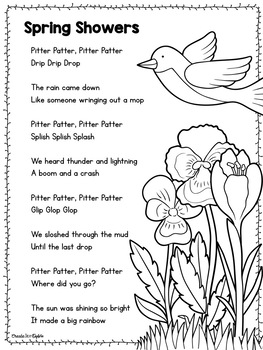
    Here is my poem one I made one I did not.
    Image result for spring poem
    Here is a poster I made. 


    Comment down below what spring means to you.


    Thank you for looking at my blog 

    Tuesday, 24 September 2019

    Asking Questions And Answering Them

                                              Asking Questions And Answering Them

    Hi today I will be talking to you about asking and answering questions about Oakley Creek.
    Here you go.

     Outcome: We are learning to ask and answer questions

    We can successfully ask and answer questions by using the following strategies

    Read a sentence and ask a question about what we have read

    Read a sentence and answer a question about what we have
    read

    Read a paragraph and ask a question about the main idea in
    the paragraph

    Read a paragraph and ask a question about the main
    character in the paragraph

    Give evidence from the text to justify asking a question

    Give evidence from the text to justify answers to a question

    Good readers ask questions before, during and after they have read a text.

    Sometimes the question is answered in the text.

    Sometimes you have to use your own prior knowledge and what’s in the text to help you come up with the answer.

    Sometimes the question may not be answered by the text at all and you will have to find another source of information to help you.

    Asking and answering questions helps you look for information, which builds understanding.

    Thank you for looking at blog


    Monday, 23 September 2019

    New science Lab

    Aim : To learn how to behave in a science lab

    1. Pay attention 
    2. Act responsibly around dangerous objects
    3. Do not run
    4. put your bag under your desk
    5. No food in the lab 
    6. Do not sniff or taste substances

    • Test tube tongs - These are used to hold a hot test tube after an experiment.
    • Glass Stirring rod - A 20cm glass rod used to stir and mix any liquids together.

    • Conical Flask - used for experiments with liquid up to 150 ml. The flask has a rubber bung for the top and the glass is heat proof.


    • Funnel
    • Glass Stirring rod - A 20cm glass rod used to stir and mix any liquids together.
    • Measuring Cylinder - this is used to measure liquids for experiments. The liquids will be poured into a beaker or test tube once measured out.


    Twenty-Five Word Poem

                                                   Twenty-Five Word Poem.

    Here is a Twenty-five word poem my Matti and I made.

    Fly fast 
    Black sky 
    White star burn bright 
    Float fast
    Light sunshine 
    Beautiful mountain 
    Ice blue river 
    Crusty snowfall 

    Water puddles run 

    Our teacher gave us twenty-five words to make a poem.
    Here are the words he gave us.

    Fly,Fast,Black,Sky,White,Star,Burn,Bright,Float,Fast,
    Light, Sunshine,Beautiful,Mountain,Ice,Blue,River, 
    Crusty,Snowfall,Water,Puddles,Run 

    Thank you for looking at my blog